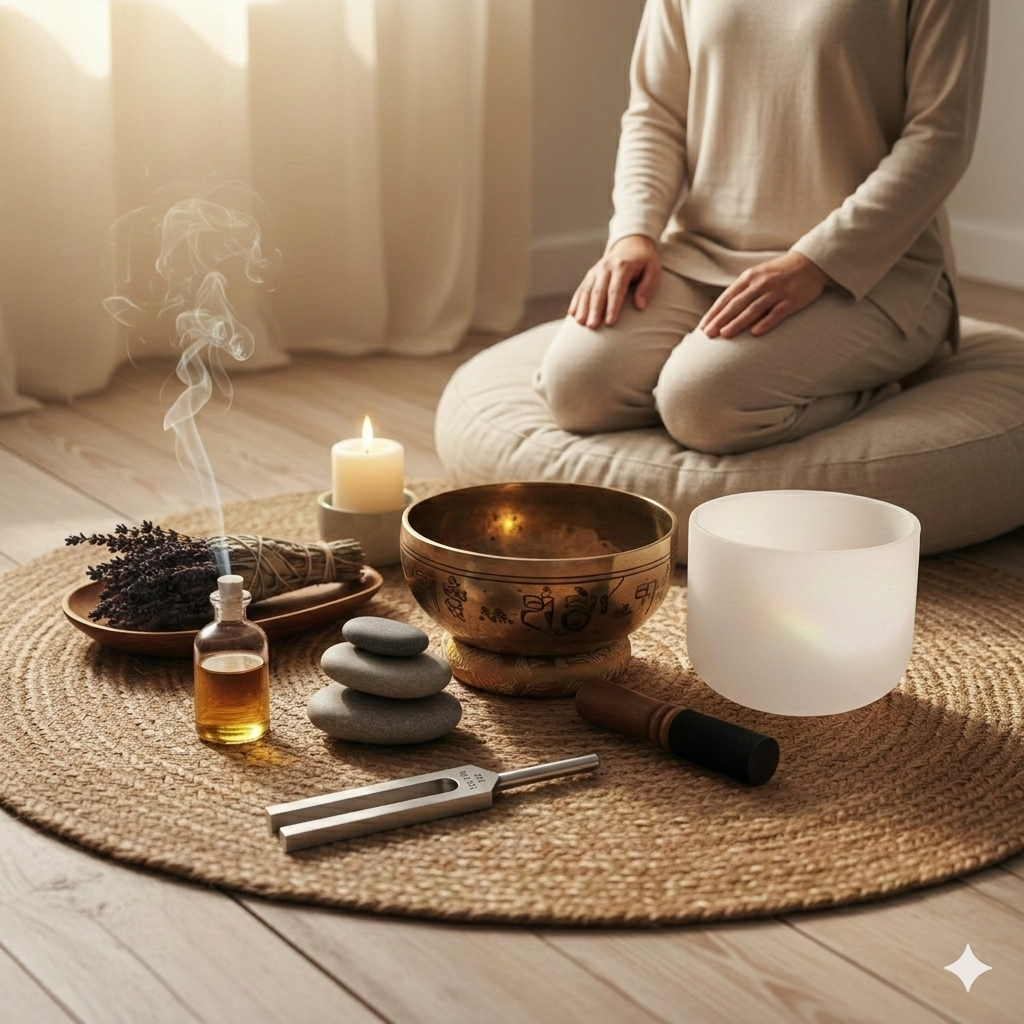
There’s something profoundly ancient — and undeniably modern — about healing through sound. Before words, there was vibration. Before thought, there was rhythm. Sound carries intention, energy, and memory, capable of shifting not only mood but the energetic patterns that shape our health.
In a world of noise and distraction, sound healing invites us back to stillness — to listen deeply, breathe fully, and remember that the body is an instrument of vibration itself. Whether you’re brand new to sound healing or simply curious, this guide offers emotional insight, practical wisdom, and holistic tools to begin your own journey with bowls, breath, and vibration.
The Science and Spirit of Sound Healing
Sound healing bridges two worlds: the measurable and the mystical. From a scientific perspective, sound waves interact with the nervous system, guiding the body into states of deep relaxation and coherence. Studies show that specific frequencies can lower blood pressure, slow brainwaves, and reduce anxiety — essentially “tuning” your body back into harmony.
Spiritually, sound is the essence of creation itself — the vibration that connects us to the universe. Many traditions, from Vedic chanting to Tibetan bowls, teach that through sound we can realign with our natural frequency — the one we lose when life pulls us out of balance.
When you engage with sound consciously, you don’t just hear it — you feel it. You become it.
1. Begin with the Breath: The Body’s First Instrument
Before you even pick up a singing bowl or listen to a tone, start with the sound of your own breath. Breath creates rhythm, and rhythm creates regulation. When you focus on slow, intentional breathing, your heart rate syncs with your inhale and exhale, balancing your nervous system.
Try this:
Take a deep breath in through your nose for four counts. Hold for two. Exhale through your mouth for six counts, making a soft “haaa” sound as you release. Notice how your shoulders drop, your chest opens, and the mind quiets. This simple practice harmonizes your inner vibration — your baseline frequency — before you work with external sounds.
Holistic Insight:
Breath is sound. Each exhale is a vibration moving through your cells, clearing stagnation and making space for peace.
2. Introduce Singing Bowls and Simple Instruments
Singing bowls, tuning forks, and chimes are powerful tools — not because they’re mystical objects, but because they remind your body how to resonate.
Crystal Singing Bowls produce pure, clear tones that stimulate higher chakras and calm the mind.
Tibetan Metal Bowls generate rich, grounding harmonics that connect to the heart and solar plexus.
To begin:
- Sit comfortably and strike the bowl gently.
- Allow the sound to fade completely before striking again.
- Notice where you feel the vibration — in your chest, your head, your spine.
With practice, you’ll learn to “read” your body’s response. Tension may surface as disharmony. Ease will feel like resonance.
Holistic Tip:
When working with sound, intention matters as much as the instrument. Before playing, silently affirm: “May this vibration restore harmony within me.”
3. Explore Your Voice as a Healing Tool
Your voice carries your unique vibration — your energetic signature. Humming, toning, or chanting are ancient methods of resetting the body’s electromagnetic field.
Start simple:
- Hum gently while focusing on your heart.
- Chant the sound “OM” or any tone that feels soothing.
- Feel the vibration moving through your throat and chest.
This practice strengthens your vagus nerve (key to emotional regulation) and helps dissolve blocked energy around expression and truth.
Spiritual Insight:
When you speak, sing, or hum from your heart, you’re literally reprogramming your cells with love and coherence.
4. Combine Sound with Intention and Space
Sound healing is most effective when paired with clear intention and sacred space. Whether you’re meditating alone or offering sound baths to others, the energy of the environment matters.
Create an atmosphere that supports deep relaxation:
- Light candles or incense.
- Use soft natural fabrics and grounding colors.
- Play gentle background frequencies (432 Hz or 528 Hz are common healing tones).
- Set an intention before beginning: peace, release, balance, clarity.
The more intentional your space, the more profoundly the sound will work through it.
5. Feel the Resonance — Don’t Force It
True sound healing isn’t about volume or technique; it’s about allowing vibration to move through you. If you listen closely, the body will show you what it needs — a deeper breath, a longer pause, or a gentler tone.
When you allow sound to lead rather than control it, your system naturally reorganizes. It’s not just sound entering the body — it’s the body remembering harmony.
Integrating Sound Healing into Daily Life
You don’t need to dedicate hours to experience the benefits. Begin with small, intentional rituals:
- Morning: Start your day with humming or playing a soft tone while setting your intention.
- Midday Reset: Step outside and listen — really listen — to the natural sounds around you.
- Evening: Use a singing bowl or sound frequency app before bed to calm the nervous system and prepare for restorative sleep.
Each moment of conscious sound is a moment of alignment.
Final Reflection: You Are the Instrument
In the end, every sound you create and receive is part of your healing symphony. Your heartbeat, your breath, your laughter — all are frequencies of life moving through you.
Sound healing reminds us that we are not separate from vibration; we are vibration. By aligning breath, intention, and tone, we return to our original rhythm — the one where body, mind, and spirit move as one.
When you begin to live in resonance, everything in your life begins to harmonize around you.